Arum italicum
Arum italicum
Arum italicum
Arum italicum
Arum italicum
Arum italicum
Arum italicum
Arum italicum
Arum italicum
Arum italicum
Arum italicum
Arum italicum
Previous
Next
zoom_in

Arum italicum

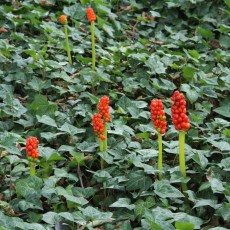
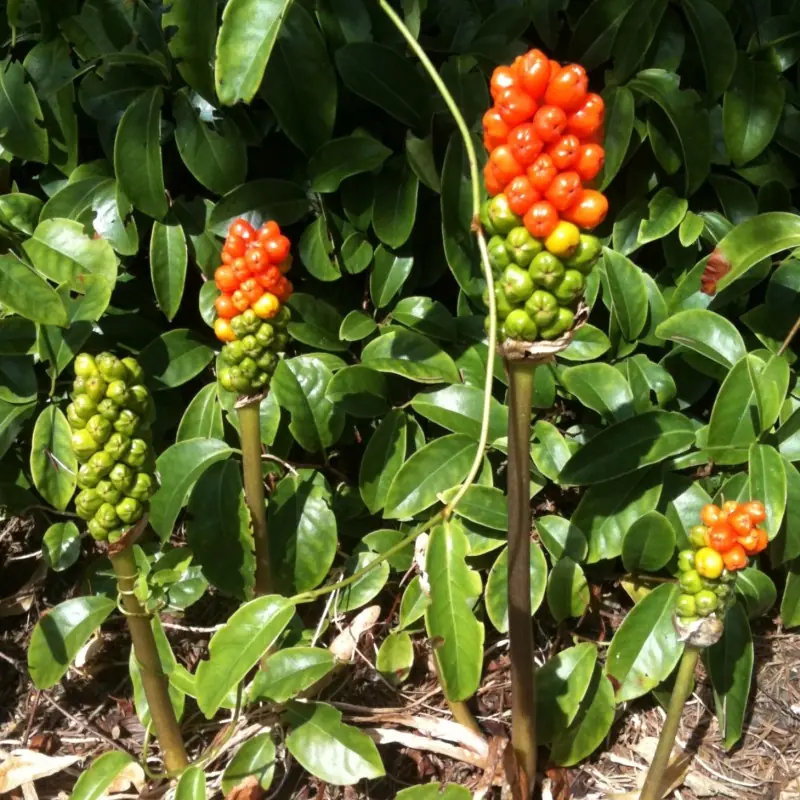
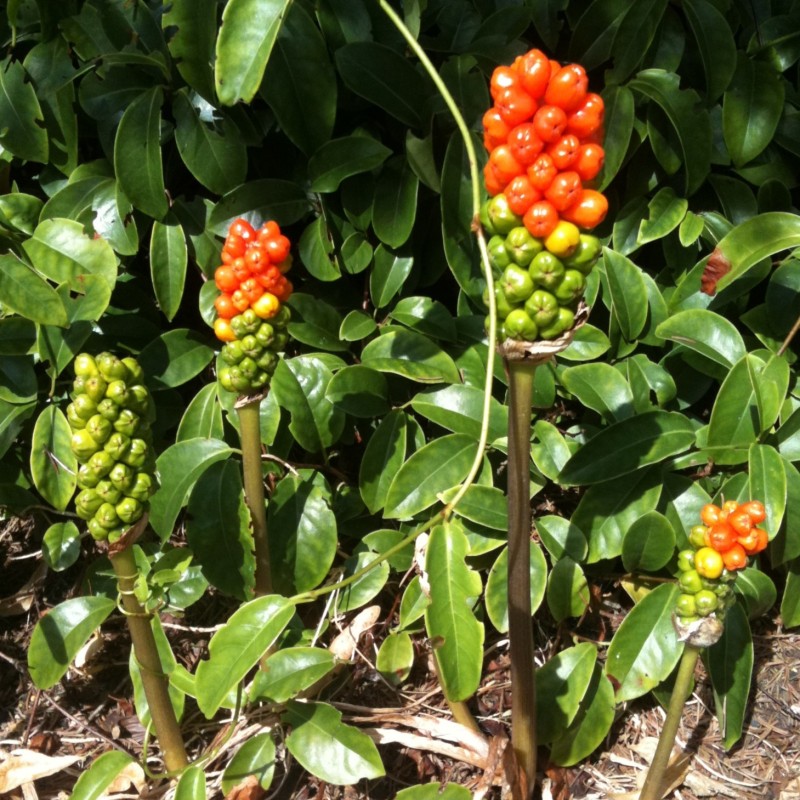
Intro: 1693. Italian Arum. Origin: Canary Islands, Cyprus, Italy, Southern France, Spain and England. Also occurs naturally in the Netherlands. The tapered leaves have clearly visible white veins. The ‘flowers’ we see on the bright yellow spadix that is partially enveloped by a pale yellow spathe. In late summer orange-red berriess appear. On the Channel Island of Guernsey they were once grown in large numbers because of their nutritious starch.
€3.75    5 pieces Available
From 10 pieces €0.71
5% discount
From 25 pieces €0.69
8% discount
The minimum purchase order quantity for the product is 5.
A family business with over 30 years of experience
Packed with care and attention for you
Choose your own shipping period during the planting season

Description

Intro: 1693. Italian Arum. Origin: Canary Islands, Cyprus, Italy, Southern France, Spain and England. Also occurs naturally in the Netherlands. The tapered leaves have clearly visible white veins. The ‘flowers’ we see on the bright yellow spadix that is partially enveloped by a pale yellow spathe. In late summer orange-red berriess appear. On the Channel Island of Guernsey they were once grown in large numbers because of their nutritious starch.

Belongs to the family Araceae

Arum lily. These native woodland plants are primarily known for their beautiful berries in the autumn.

Forty species are known from Europe to Central Asia. Arum lilies are monoecious: the male flowers are located in the upper part of the spadix, while the female flowers, equipped with a 'simple' ovary, are in the lower part.
Plant data

Reference
321
Preferred Placement
voor halfschaduw tot schaduw
Color
light yellow
Bulb size
I.
Bulb Spacing
10
Planting Depth
6-8
Height in cm.
40
Flowering time in the months
4-5
Milieukeur Kweker
MPS-910199
Delivery period
Levering planttijd
Loading...