Description
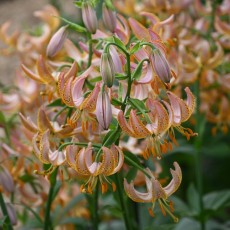
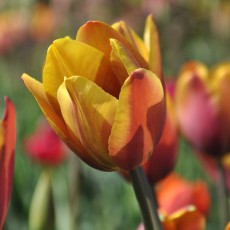
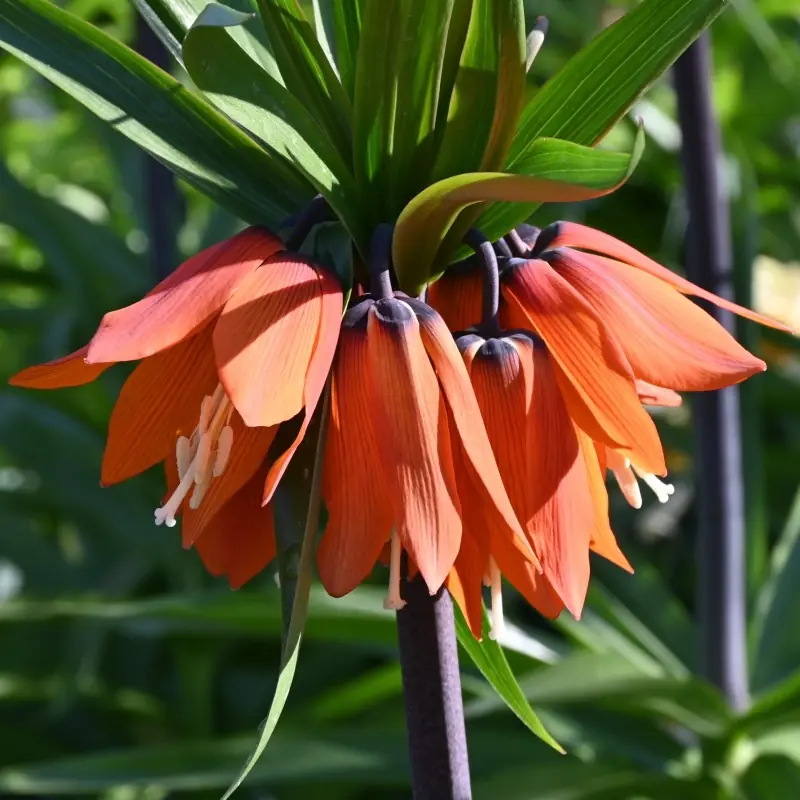
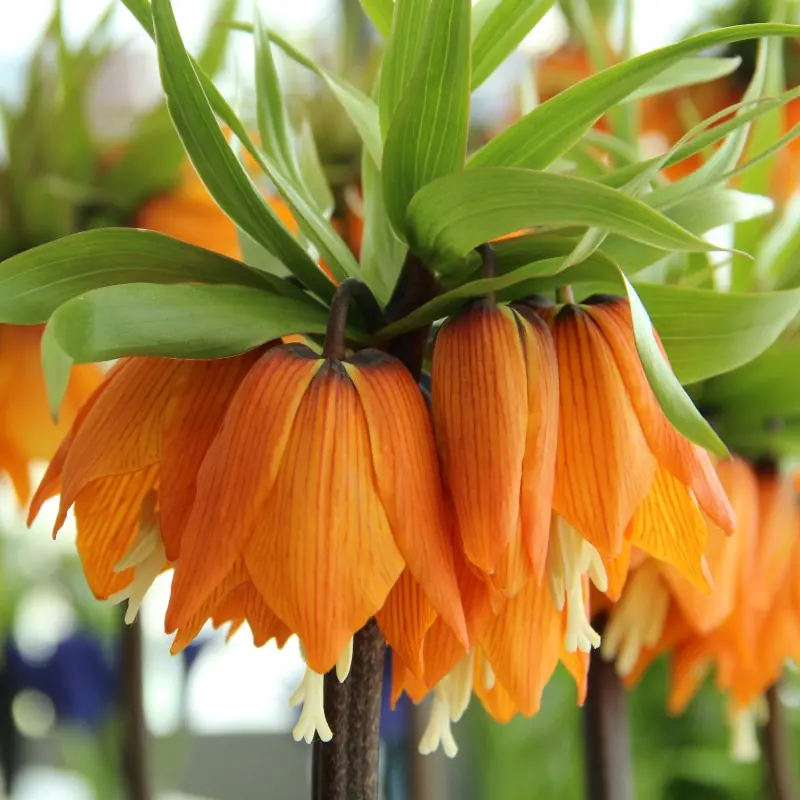
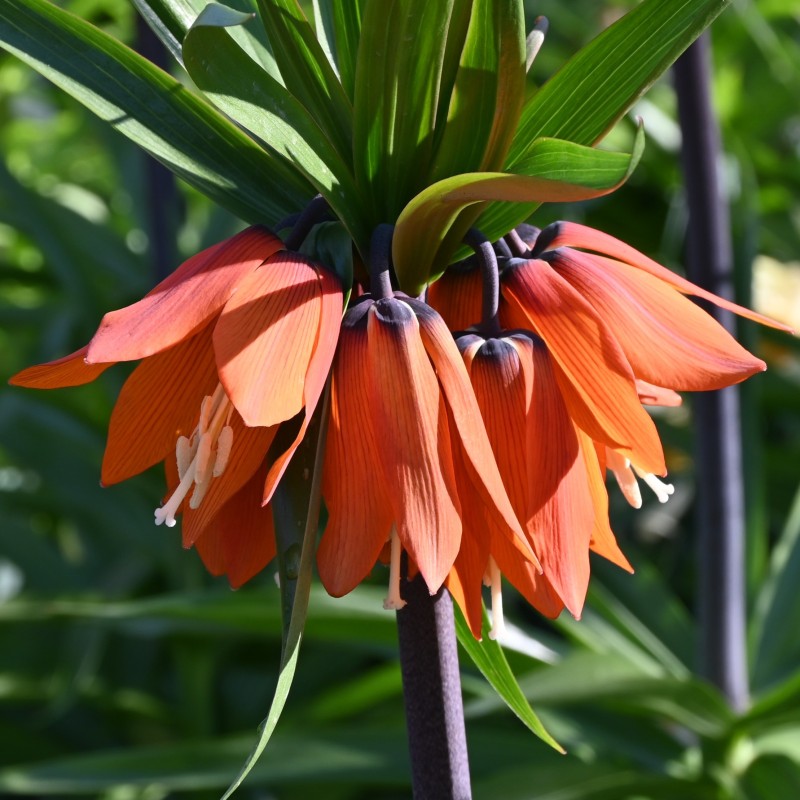
A Fritillaria that was registered in 2004. Sturdy 75 cm high purple-brown stalk with small green spots. Well-growing variety with many 6.5 cm wide grey-orange flowers. The bells are orange on the inside with orange-red veins.
Crown Imperial. Around the middle of the sixteenth century, the first fritillarias were planted in Leiden by Carolus Clusius, via Vienna (Austria). Origin: Turkey, the southeast and west of Iran, Afghanistan, Pakistan, and the Kashmir mountains. The very sturdy flower stalk is equipped with narrow, tapering, glossy leaves on the lower half. The lily-like flowers, shaped like a trumpet, are accompanied by a corolla of green leaves. Each veined petal has a clearly visible nectary on the inside. The typical ‘fox scent’ of crown imperials, which is said to repel moles, field mice, and voles, is caused by a single volatile substance, a sulfur-containing terpene, that the plant produces.
To ensure good flowering for several consecutive years, it is important that the crown imperial is provided with plenty of nutrients and organic matter annually.